Kai Powell · 5 November 2026
Ancient Pollen Records Locked in Hilltop Organic Deposits Offer Clues to Historical Vegetation Shifts
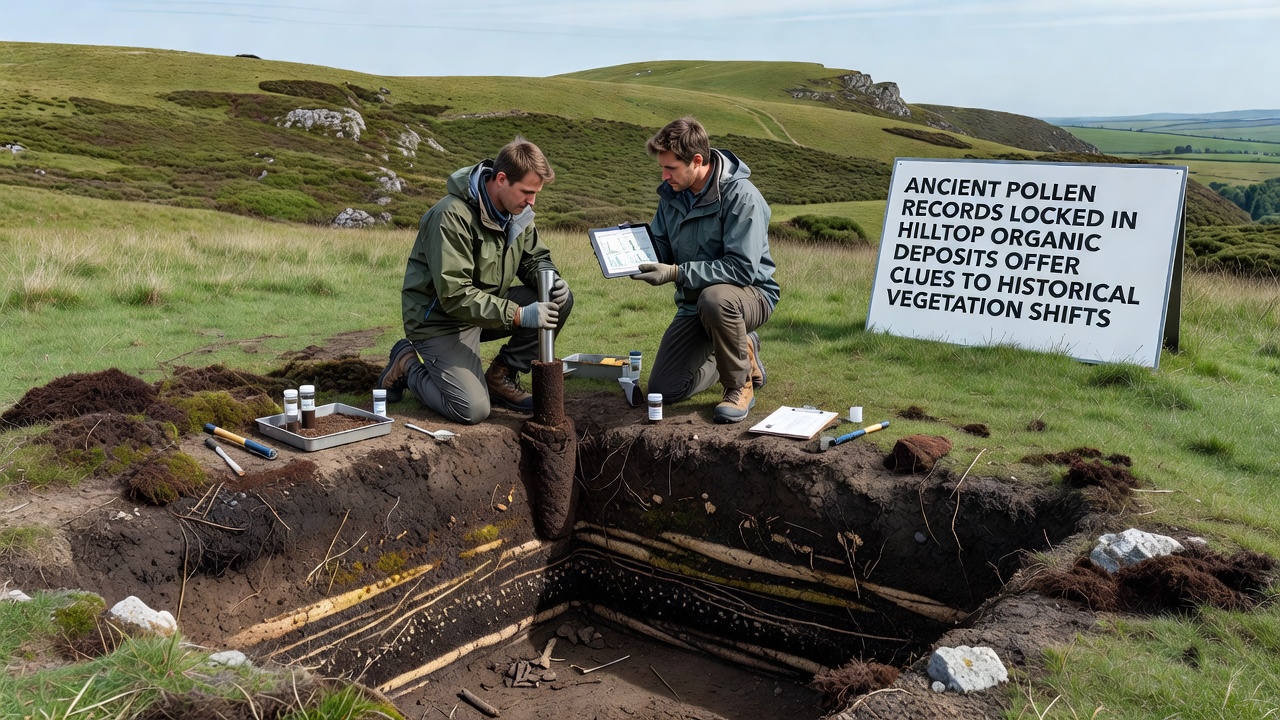
Ancient pollen grains trapped in hilltop organic deposits provide researchers with detailed records of vegetation changes spanning thousands of years, and scientists extract these microfossils from elevated soil layers to reconstruct past ecosystems across various regions. These deposits form through gradual accumulation of plant material and sediments on knolls and ridges where drainage patterns limit decomposition rates while preserving organic matter over extended periods. Researchers collect core samples from such sites, process the material to isolate pollen, and identify species through microscopic examination combined with radiocarbon dating techniques that establish timelines for each layer.
Formation and Preservation Mechanisms
Hilltop organic deposits develop when windblown particles and local plant debris settle in areas with sufficient moisture retention yet limited oxygen exposure, which slows breakdown and allows pollen walls to remain intact for centuries or millennia. Studies from multiple continents indicate that these elevated locations capture pollen from both local vegetation and regional sources carried by air currents, creating layered archives that reflect broader landscape dynamics. Data from the US Geological Survey shows consistent patterns where such deposits in mountainous zones preserve records dating back to the Holocene epoch, offering continuous sequences unlike many lowland sediments disrupted by erosion or flooding.
Analysis begins with careful coring to avoid contamination, followed by chemical treatments that separate pollen from surrounding matrix materials, and then counting and classification under high-powered microscopes. Teams compare fossil assemblages to reference collections of modern pollen to determine which plant communities existed at specific times, while statistical models account for production rates and dispersal differences among species. This approach reveals transitions such as expansions of coniferous forests during cooler intervals or increases in grassland indicators during drier phases, all documented through quantitative ratios in the preserved grains.
Insights from Global Research Projects
Multiple investigations across North America and Europe have utilized these records to track shifts linked to climatic fluctuations, with one study in the Appalachian highlands documenting a move from oak-dominated woodlands to mixed pine and birch stands around 4,000 years ago based on pollen percentages in successive deposit layers. Similar work in Australian highlands by CSIRO researchers has identified expansions of eucalyptus species coinciding with changes in fire frequency inferred from charcoal particles mixed in the same samples. These findings align with independent climate proxies such as ice core data and lake sediment records, strengthening interpretations of how temperature and precipitation influenced plant distributions over time.
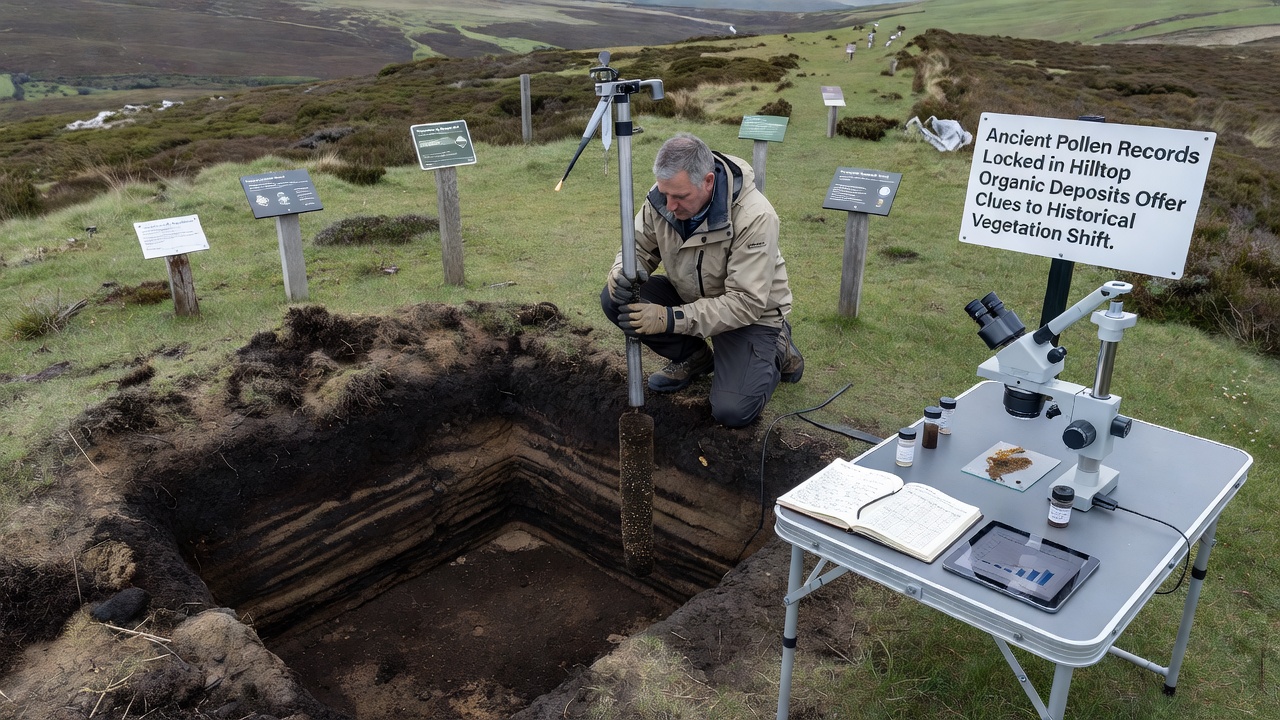
Recent advancements include automated imaging systems that speed up pollen identification while maintaining accuracy through machine learning trained on verified specimens, and applications of ancient DNA techniques that complement traditional counts by detecting species missed in morphological surveys. In November 2026, updated datasets from ongoing high-elevation monitoring programs incorporated new cores from several sites, revealing finer resolution details on vegetation responses during the transition from the Little Ice Age to modern warming periods. Observers note that integration of these pollen records with satellite vegetation mapping helps validate models projecting future changes under continued climate shifts.
Applications in Understanding Broader Environmental Patterns
Pollen sequences from these deposits contribute to reconstructions of past biodiversity levels and help identify periods when certain taxa declined or migrated in response to environmental pressures, providing baselines for conservation planning in contemporary landscapes. Researchers cross-reference findings with historical land use records to separate natural variability from human influences such as agriculture or forestry practices that altered regional floras. Evidence from multiple studies demonstrates that hilltop sites often yield more stable records than valley bottoms because they experience less sediment reworking from water flow, resulting in clearer chronological sequences.
Collaborative projects involving universities and government agencies have expanded sampling networks to include underrepresented areas like high plateaus in Asia and South America, where preliminary results indicate unique vegetation histories tied to monsoonal patterns and Andean uplift events. These expanded datasets allow for hemispheric comparisons that highlight both synchronous global responses to major climate events and regional variations driven by topography or soil conditions. Quantitative analyses of pollen influx rates further quantify biomass changes, offering metrics that feed into carbon cycle models used by climate researchers.
Conclusion
Ancient pollen preserved in hilltop organic deposits continues to supply precise evidence of historical vegetation shifts, and ongoing refinements in extraction, dating, and identification methods enhance the resolution of these environmental archives. Integration with other proxy data sources strengthens overall understanding of how ecosystems responded to past conditions, supporting more accurate projections of future changes. As additional cores undergo analysis and new technologies come online, the records from these elevated deposits remain central to efforts tracking long-term ecological dynamics across diverse geographic settings.