Kai Powell · 24 September 2026
Earthworm Castings and Their Contribution to Knoll Humus Quality
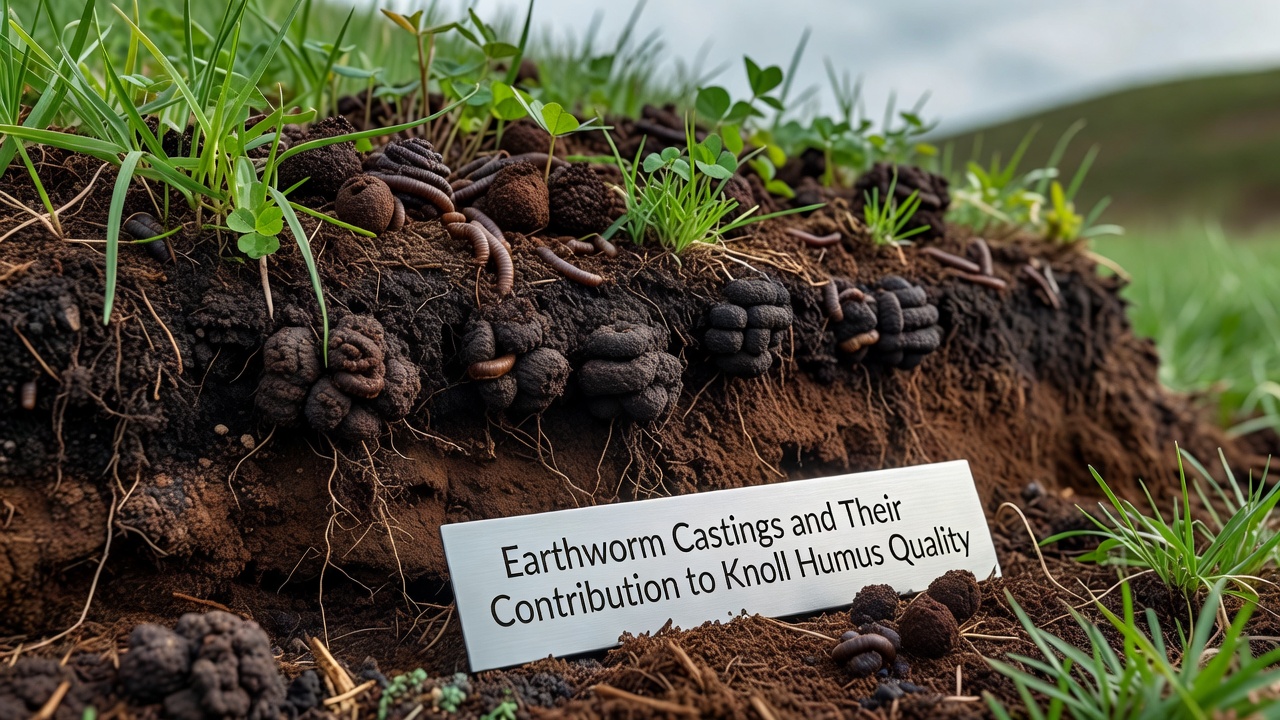
Earthworm castings form when organic material passes through the digestive systems of earthworms and emerges as stabilized granular deposits that contain elevated levels of nitrogen, phosphorus, and potassium along with a diverse microbial population. These deposits integrate into knoll humus layers where they supply readily available nutrients while supporting the gradual formation of stable humic compounds that improve overall soil fertility in sloped or elevated terrain.Composition of Earthworm Castings
Analyses conducted by soil laboratories reveal that earthworm castings typically contain 1.5 to 2.5 percent nitrogen, 1.5 to 2.0 percent phosphorus, and 1.0 to 1.5 percent potassium on a dry-weight basis, concentrations that exceed those found in the surrounding parent material. The castings also harbor bacteria, fungi, and actinomycetes that continue to mineralize organic compounds after deposition, releasing additional nutrients over extended periods. Trace elements such as zinc, copper, and manganese appear in plant-available forms because earthworm gut processes chelate these metals with organic acids.
Mechanisms Affecting Knoll Humus Quality
Castings deposited on knoll surfaces increase water-stable aggregate formation because polysaccharides and glomalin produced during gut transit bind mineral particles into stable clusters. This aggregation reduces surface runoff on slopes and allows greater infiltration during rainfall events, which in turn supports deeper root development and sustained microbial activity within the humus profile. Researchers tracking nutrient cycling have measured higher cation exchange capacity in humus samples that contain 15 percent or more earthworm casting material compared with adjacent areas lacking recent casting input.
Organic matter stabilization occurs as earthworms fragment plant residues and mix them with mineral soil during ingestion, creating intimate associations that protect carbon from rapid decomposition. In knoll settings where erosion can expose fresh mineral surfaces, this mixing action accelerates the incorporation of new organic inputs into the humus fraction, raising total organic carbon content over successive seasons.
Nutrient Dynamics and Microbial Activity
Field observations across multiple knoll sites indicate that areas receiving regular earthworm casting deposits maintain higher nitrate and ammonium concentrations during the growing season because nitrifying bacteria thrive in the moist, aerated microenvironment created by casting aggregates. Enzyme assays show elevated phosphatase and urease activity within casting-amended humus, confirming ongoing nutrient release from organic sources. These processes operate continuously, supplying plants with a steady nutrient stream rather than episodic flushes associated with synthetic fertilizer applications.
Research Findings Through September 2026
Long-term monitoring programs that continued through September 2026 recorded measurable increases in humus depth and stability where earthworm populations remained above 150 individuals per square meter. Soil cores extracted from these locations exhibited greater resistance to slaking under simulated rainfall tests, demonstrating the structural benefits of casting incorporation. Parallel laboratory incubations confirmed that casting-amended knoll humus retained 12 to 18 percent more moisture at field capacity than unamended controls, a factor that supports microbial respiration during dry intervals.
Data compiled by the United States Department of Agriculture soil health research programs align with European studies from the Joint Research Centre that document similar improvements in aggregate stability and nutrient retention when earthworm activity contributes casting material to surface horizons. These independent datasets indicate consistent patterns across temperate regions with varying parent materials and slope gradients.
Integration with Knoll Landscape Features
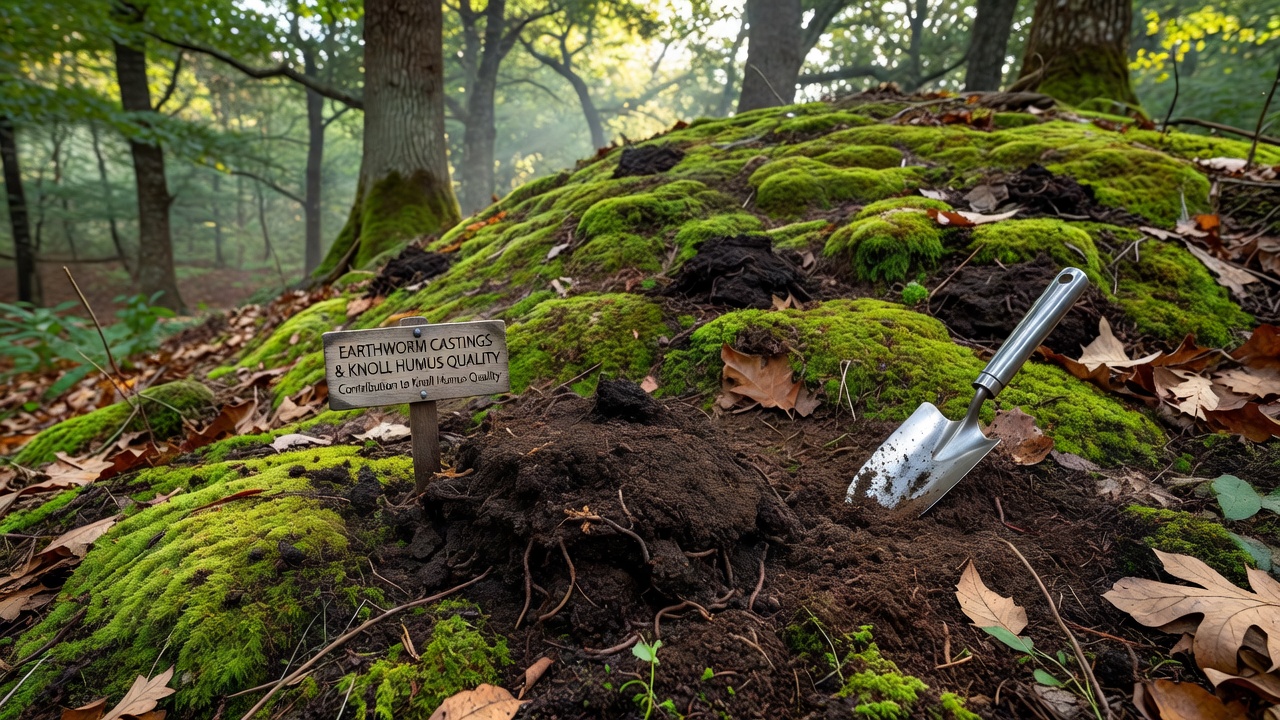
Knoll topography creates microclimates that influence earthworm distribution and casting deposition patterns, with higher densities typically occurring on north-facing aspects and lower slopes where moisture persists longer. Castings that accumulate in these zones gradually migrate downslope through bioturbation and water movement, redistributing nutrients across the knoll profile and contributing to a more uniform humus layer over time. Observers note that this redistribution helps counteract the natural tendency for organic matter to accumulate only in depressions, thereby improving overall site productivity.
Conclusion
Earthworm castings supply concentrated nutrients, enhance microbial communities, and promote aggregate stability that directly elevates knoll humus quality. Evidence gathered from multiple research initiatives demonstrates measurable gains in nutrient retention, water-holding capacity, and carbon stabilization when castings integrate into humus layers. Continued monitoring will clarify the long-term trajectory of these contributions across different climatic and topographic conditions.