Riley Friedrich · 10 September 2026
Fungal Partnerships That Shape Nutrient Flow in Knoll Humus Beds
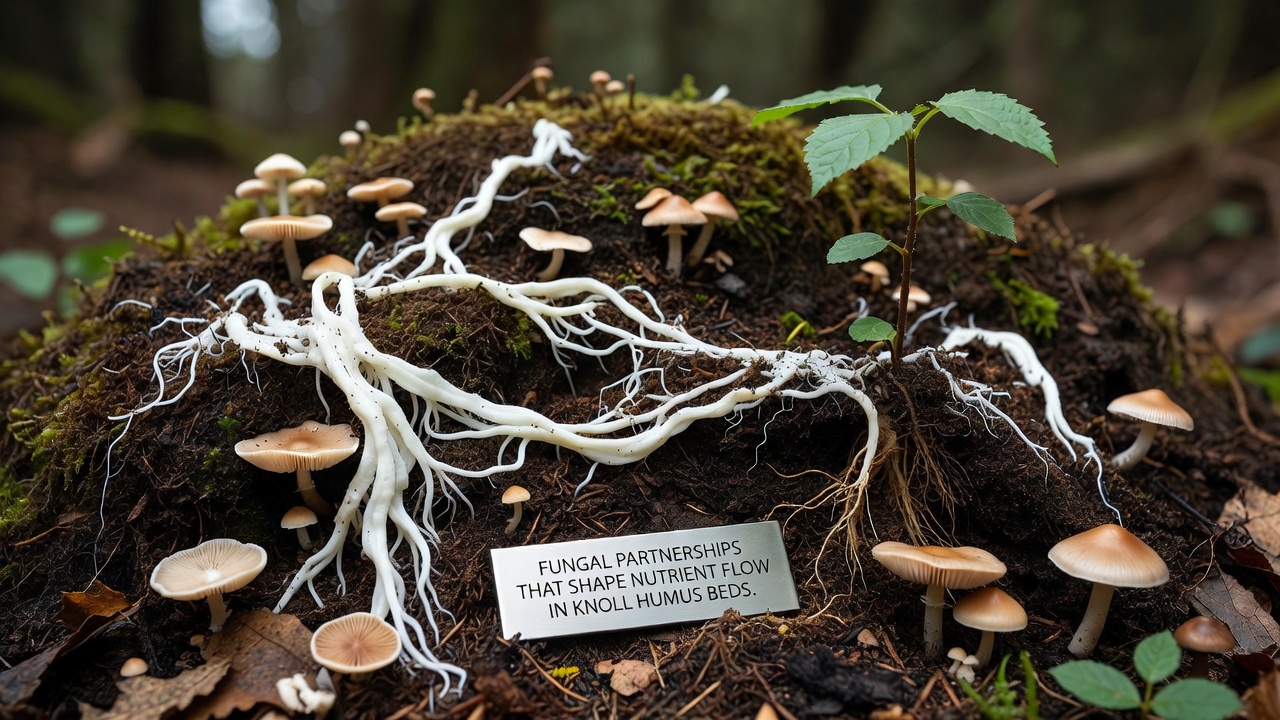
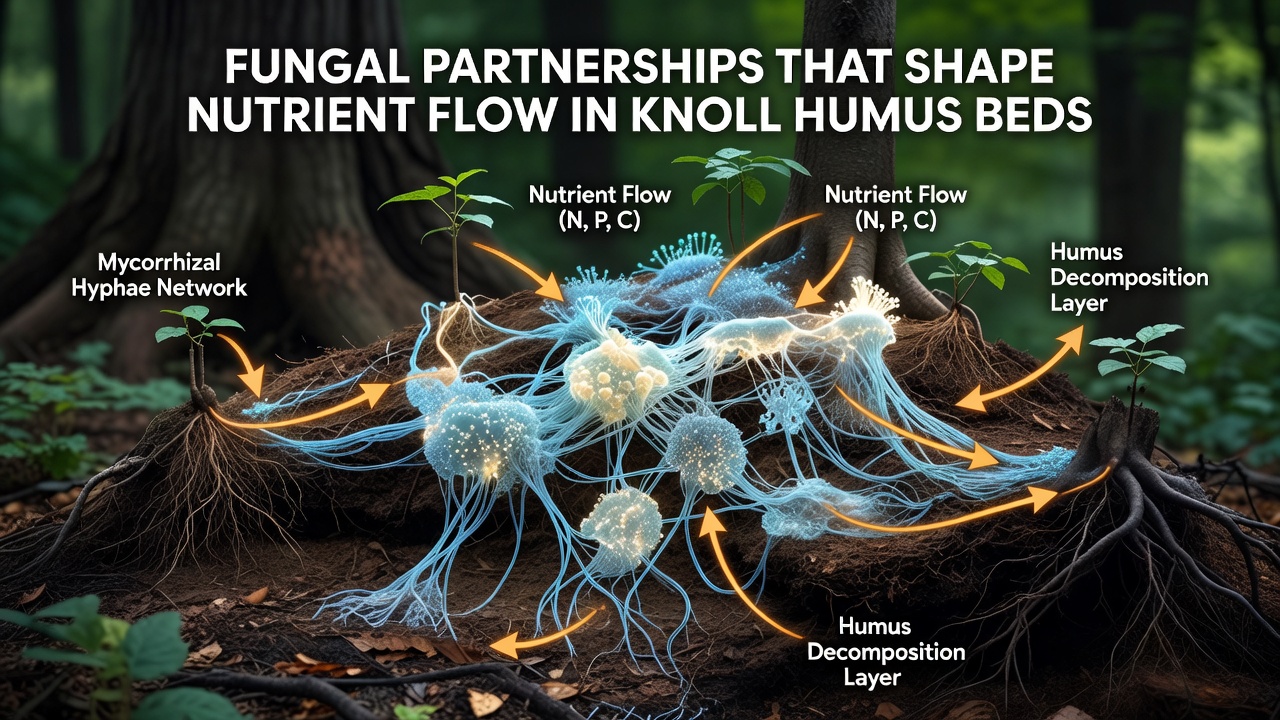
Knoll humus beds rely on intricate fungal partnerships that move nutrients through dense organic layers, and researchers have documented how these relationships sustain plant growth where soil structure alone would fall short. Mycorrhizal fungi extend root systems by forming hyphal networks that reach phosphorus and nitrogen locked in decaying matter, while saprotrophic species break down complex compounds into forms plants can absorb directly. Data from long-term field plots show these exchanges happen continuously as temperature and moisture shift through the growing season, creating steady flows rather than isolated bursts of availability.
Types of Fungal Associations Found in Humus Layers
Arbuscular mycorrhizal fungi dominate in many knoll humus beds because they penetrate root cells and create arbuscules that increase surface area for nutrient transfer, whereas ectomycorrhizal species form sheaths around roots and excel at mobilizing organic nitrogen in cooler climates. Observers note that both types often coexist in the same bed, with their relative abundance shifting based on plant species present and the depth of accumulated humus. Studies conducted across multiple sites reveal that beds enriched with mixed hardwood litter support greater fungal diversity, which in turn accelerates the cycling of potassium and micronutrients that would otherwise remain bound in leaf fragments.
Mechanisms Driving Nutrient Movement
Hyphae act as highways that transport phosphorus from distant particles back to host roots, and the same networks move carbon compounds in the opposite direction to feed fungal metabolism. Enzyme activity at hyphal tips releases bound nutrients from humus particles, after which transport proteins move ions across membranes into the plant vascular system. Evidence collected from isotope tracing experiments demonstrates that up to 80 percent of plant phosphorus can arrive through these fungal routes during peak growth periods, while nitrogen transfer rates vary with soil pH and the presence of competing microbial communities. In September 2026, monitoring stations installed in established knoll humus beds recorded elevated transfer efficiency following late-summer rains that rehydrated surface layers and stimulated renewed hyphal growth.
Role of Environmental Conditions in Knoll Humus Beds
Moisture retention within humus layers creates stable microhabitats that allow fungal hyphae to persist through dry spells, yet excessive saturation can shift oxygen levels and favor anaerobic bacteria that compete for the same substrates. Temperature fluctuations influence enzyme kinetics, with optimal activity occurring between 15 and 25 degrees Celsius in temperate regions, and researchers have recorded reduced nutrient delivery when beds experience prolonged heat above 30 degrees. Organic matter composition matters as well, since beds built from conifer needles support slower decomposition rates compared with those incorporating deciduous leaves, altering the timing and quantity of nutrients released through fungal pathways.
Observed Patterns Across Different Bed Designs
One study revealed that raised knoll humus beds with deeper organic horizons maintained higher mycorrhizal colonization rates than flat beds of equivalent material, likely because improved drainage prevented waterlogging that suppresses fungal activity. Another investigation tracked beds amended with biochar and found faster establishment of fungal networks, resulting in measurable increases in zinc and copper uptake by leafy crops. Those who've examined multiple installations note that beds positioned near existing woodland edges inherit more diverse fungal inoculum from surrounding trees, shortening the time required for effective partnerships to develop after planting.
Recent Data on Nutrient Cycling Efficiency
According to figures released by Natural Resources Canada, fungal-mediated phosphorus transfer in organic soils can reach 2.3 kilograms per hectare annually under favorable conditions, while Australian research from the University of Western Australia indicates similar beds lose less than 12 percent of applied nitrogen through leaching when mycorrhizal communities remain intact. These measurements highlight how fungal partnerships reduce the need for supplemental fertilizers by concentrating nutrients near active root zones. Monitoring programs continue to collect seasonal data that will clarify how climate trends affect these rates over successive years.
Conclusion
Fungal partnerships remain central to nutrient dynamics in knoll humus beds because they connect organic reservoirs with plant demand through physical networks and biochemical processes. Continued observation of these systems provides concrete data on how management choices influence the speed and direction of nutrient movement, and records from multiple regions show consistent patterns once initial establishment occurs. The interactions documented so far offer a reliable foundation for predicting how future beds will perform under varying environmental conditions.