Kai Powell · 8 October 2026
Seasonal Precipitation Patterns and Their Effects on Organic Decomposition Within Elevated Soil Deposits
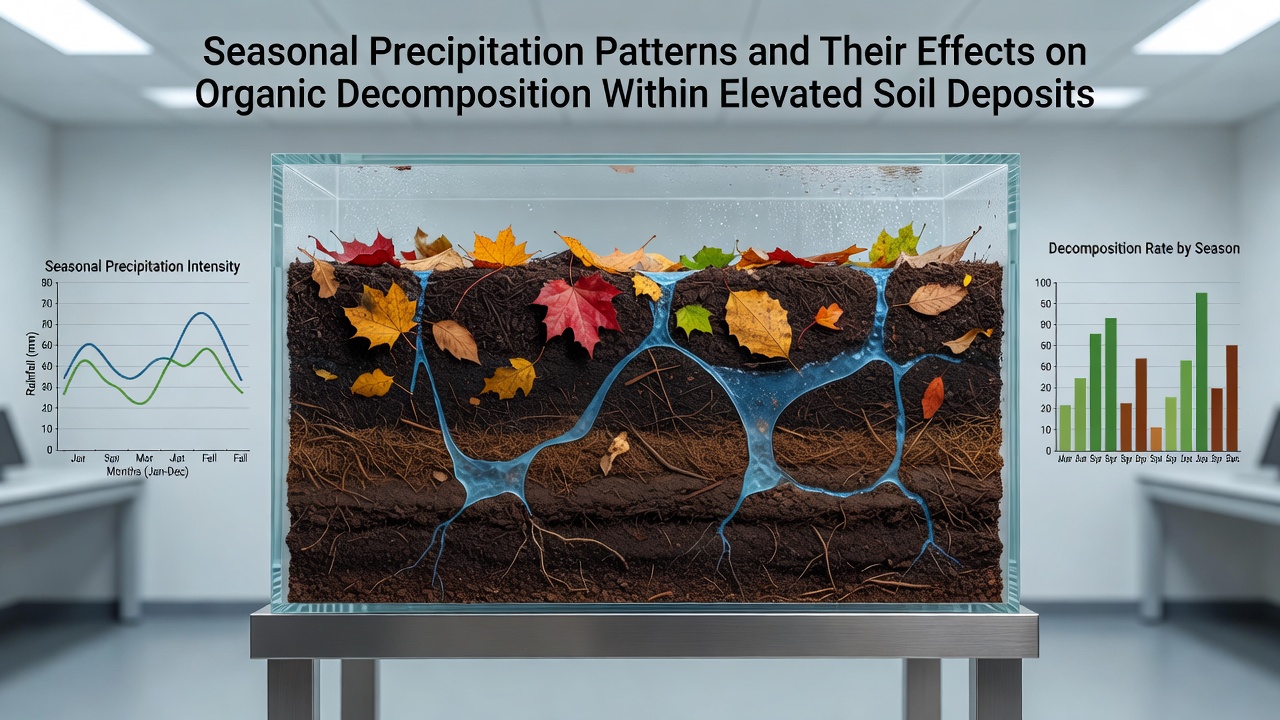
Seasonal precipitation patterns drive moisture cycles that directly shape organic decomposition rates in elevated soil deposits, where drainage characteristics differ from lowland areas. Researchers track these interactions through field measurements across multiple climate zones, noting how rainfall timing and volume alter microbial activity and nutrient release. Data from long-term monitoring stations indicate that wetter seasons accelerate breakdown processes while drier periods slow them, particularly in soils perched on slopes or mounds that shed water more readily than flat terrain.
Regional Variations in Precipitation Influence Soil Moisture Dynamics
Precipitation regimes vary widely by latitude and topography, with monsoon systems in Asia delivering concentrated summer rains that saturate elevated deposits for weeks at a time. In contrast, Mediterranean climates produce winter rainfall peaks followed by extended dry intervals, allowing soils on rises to dry out between storms. Observers note that these differences create distinct decomposition windows, as excess water in elevated profiles promotes anaerobic conditions while insufficient moisture limits bacterial and fungal metabolism. Studies from the Australian Bureau of Meteorology link El Niño phases to reduced winter precipitation across southeastern highlands, resulting in measurable drops in organic matter turnover during those years.
Microbial Communities Respond to Moisture Fluctuations
Organic decomposition depends on aerobic and anaerobic microbes whose populations shift with soil water content. When precipitation increases in elevated deposits, oxygen diffusion decreases and facultative anaerobes gain dominance, shifting breakdown pathways toward slower fermentation processes. Conversely, drier intervals restore aeration and favor faster aerobic respiration. Research indicates that repeated wetting and drying cycles in these soils enhance overall decomposition efficiency through physical disruption of organic particles and stimulation of dormant microbial spores. Canadian soil surveys document how spring snowmelt combined with early summer rains creates optimal moisture bands in upland deposits, supporting peak enzyme activity before midsummer drying sets in.
Take one monitoring project in the Pacific Northwest where researchers installed sensors at multiple depths across knoll-like formations. The instruments recorded how autumn rains first wet surface layers, then percolate downward, creating temporary moisture gradients that microbes exploit sequentially. These patterns repeat annually yet vary in intensity based on storm frequency and total rainfall volume.
Effects on Nutrient Cycling and Carbon Release
Decomposition rates control carbon dioxide emissions and nutrient availability within elevated soil deposits. Higher seasonal precipitation generally increases mineralization of nitrogen and phosphorus, yet rapid drainage in these locations prevents prolonged waterlogging that could otherwise trap nutrients. Evidence from European long-term ecological research sites shows that autumn precipitation spikes coincide with elevated respiration rates measured at mound edges, where organic inputs from leaf fall meet renewed moisture. Data collected through 2025 reveal consistent seasonal pulses rather than steady year-round activity, with October often marking a transition point as rains return after summer drought.
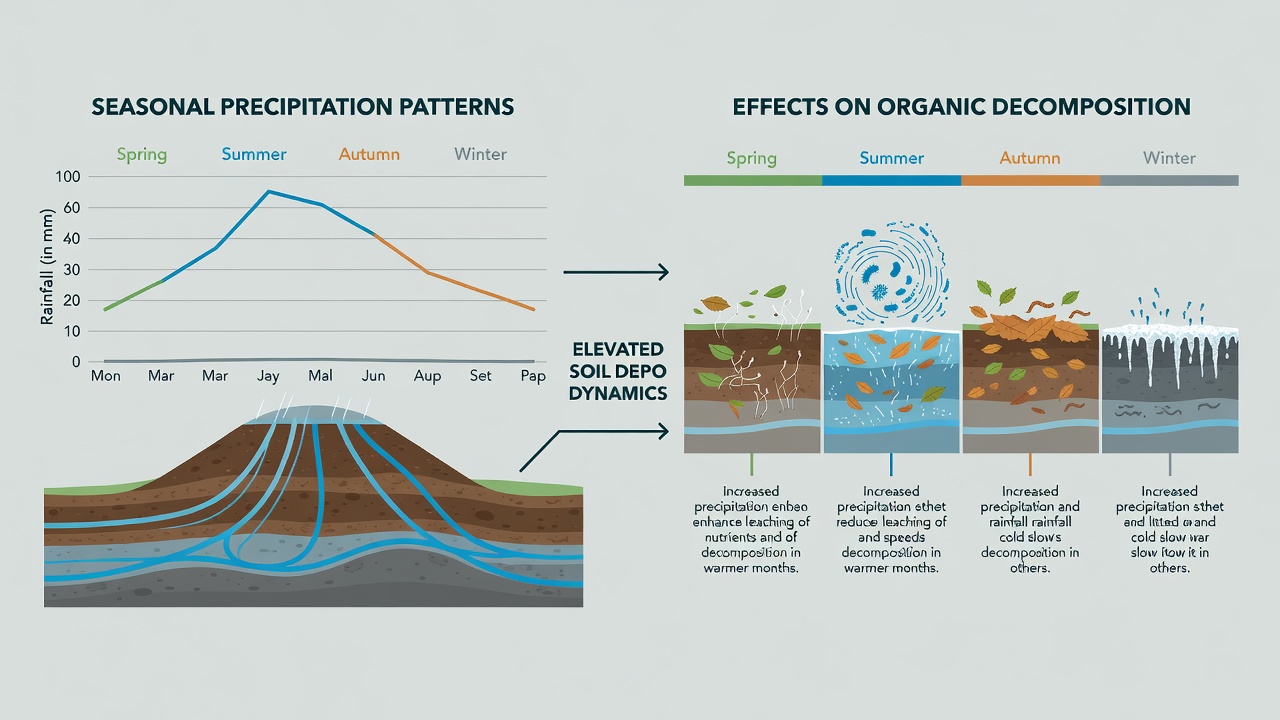
What's interesting is how topography amplifies these effects. Elevated deposits shed water laterally, so central zones retain moisture longer than margins. This spatial variation produces decomposition hotspots that migrate with changing precipitation intensity. Figures from USDA Natural Resources Conservation Service monitoring programs demonstrate that sites receiving 800 to 1200 millimeters of annual rain experience decomposition rates roughly double those in drier regimes with comparable temperatures, provided drainage remains unimpeded.
Interactions With Temperature and Organic Input Quality
Precipitation never acts alone. Temperature and the chemical composition of incoming organic matter modulate how moisture translates into decomposition outcomes. Lignin-rich materials decompose more slowly regardless of water availability, whereas labile compounds respond sharply to seasonal wetting. Researchers at institutions in New Zealand have quantified these interactions through litter bag experiments placed at varying elevations, finding that winter rains accelerate loss of easily degradable fractions while leaving recalcitrant residues intact until warmer, wetter periods arrive.
Conclusion
Seasonal precipitation patterns establish the temporal framework within which organic decomposition proceeds in elevated soil deposits. Moisture availability governs microbial succession, nutrient release timing, and carbon flux magnitude, with drainage properties of raised landforms creating distinct response signatures compared to surrounding landscapes. Continued monitoring across diverse regions supplies the datasets needed to refine predictive models of how shifting rainfall regimes may alter these fundamental soil processes in coming decades.